
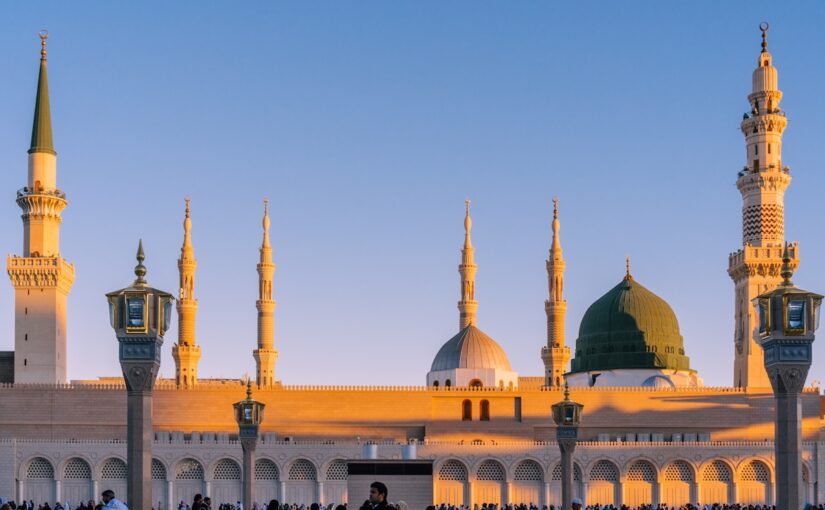
Tajdar-e-Haram (تاجدار حرم) – Naat Lyrics, English Translation & Meaning
Tajdar-e-Haram (تاجدار حرم) is one of the most iconic and beloved naats in the Islamic world. Its title translates to “The Crown of the Sacred Sanctuary,” a reference to Prophet Muhammad ﷺ as the sovereign ruler of the Haram (the sacred precincts of Mecca and Medina). This powerful devotional piece has been performed for decades by legendary qawwals and continues to move millions of hearts across the globe.
About the Naat
Naat: Tajdar-e-Haram (تاجدار حرم)
Language: Urdu with Persian and Arabic verses
Poet: Payam Saihalwi (Muhammad Shafiq)
Popularized by: Sabri Brothers (Ghulam Farid Sabri & Maqbool Ahmed Sabri)
Also performed by: Atif Aslam (Coke Studio), Owais Raza Qadri, and many others
“Tajdar-e-Haram” is a supplication — a heartfelt plea to Prophet Muhammad ﷺ seeking his merciful glance (nigah-e-karam). The poet describes himself and all believers as poor, destitute souls who have no one but the Prophet to turn to. The naat beautifully weaves together themes of spiritual poverty, the believer’s helplessness without the Prophet’s intercession, and an intense longing for the blessed city of Medina.
The composition gained worldwide fame through the Sabri Brothers’ iconic qawwali rendition in the 1970s and 1980s. Their powerful vocals, layered improvisations, harmonium, and rhythmic handclaps created an atmosphere of spiritual ecstasy that transcended cultural boundaries. In 2015, a new generation discovered the naat through Atif Aslam’s celebrated performance on Coke Studio Pakistan, which amassed hundreds of millions of views and introduced this timeless masterpiece to a global audience.
What makes “Tajdar-e-Haram” so universally cherished is its emotional directness. It doesn’t use complex Sufi metaphors or esoteric language. Instead, it speaks the language of the heart — a sinner’s cry for mercy, a lover’s longing for the beloved Prophet, and a believer’s hope that the door of the Prophet will never be closed to those who seek him.
Tajdar-e-Haram Lyrics in Urdu (تاجدار حرم کے بول)
تاجدارِ حرم ہو نگاہِ کرم
ہم غریبوں کے دن بھی سنور جائیں گے

حامئِ بیکساں! کیا کہے گا جہاں
آپ کے در سے خالی اگر جائیں گے

تاجدارِ حرم
تاجدارِ حرم

خوفِ طوفان ہے، آندھیوں کا ہے ڈر
سخت مشکل ہے آقا! کدھر جائیں ہم
آپ ہی گر نہ لیں گے ہماری خبر
ہم مصیبت کے مارے کدھر جائیں گے

تاجدارِ حرم
تاجدارِ حرم

کوئی اپنا نہیں، غم کے مارے ہیں ہم
آپ کے در پہ فریاد لائے ہیں ہم
ہو نگاہِ کرم، ورنہ چوکھٹ پہ ہم
آپ کا نام لے لے کے مر جائیں گے

تاجدارِ حرم
تاجدارِ حرم

آپ کے در سے کوئی نہ خالی گیا
اپنے دامن کو بھر کے سوالی گیا
ہو حبیبِ حزیں پر بھی آقا کرم
ورنہ اوراقِ ہستی بکھر جائیں گے

تاجدارِ حرم
تاجدارِ حرم

مے کشو! آؤ آؤ مدینے چلیں
دستِ ساقیِ کوثر سے پینے چلیں
یاد رکھو اگر اٹھ گئی اک نظر
جتنے خالی ہیں سب جام بھر جائیں گے

تاجدارِ حرم
تاجدارِ حرم

کیا تم سے کہوں اے عرب کے کُنور
تم جانتے ہو من کی بتیاں
در فرقتِ تو اے امی لقب
کاٹے نہ کٹے ہیں اب رتیاں

تاجدارِ حرم
تاجدارِ حرم

یا مصطفیٰ، یا مجتبیٰ
ارحم لنا، ارحم لنا
دستِ ہمہ بے چارہ را
داماں تو ہی، داماں تو ہی

من عاصیم، من عاجزم
من بے کساں، حالے مرا
پرساں توئی، پرساں توئی

تاجدارِ حرم ہو نگاہِ کرم
ہم غریبوں کے دن بھی سنور جائیں گے

تاجدارِ حرم
تاجدارِ حرم
English Transliteration
Tajdar-e-haram ho nigah-e-karam
Hum ghareebon ke din bhi sanwar jayenge

Haami-e-bekasan! Kya kahega jahan
Aap ke dar se khali agar jayenge

Tajdar-e-haram
Tajdar-e-haram

Khauf-e-toofan hai, aandhiyon ka hai dar
Sakht mushkil hai aaqa! Kidhar jayen hum
Aap hi gar na lenge hamari khabar
Hum museebat ke maare kidhar jayenge

Tajdar-e-haram
Tajdar-e-haram

Koi apna nahi, gham ke maare hain hum
Aap ke dar pe faryaad laaye hain hum
Ho nigah-e-karam, warna chaukhat pe hum
Aap ka naam le le ke mar jayenge

Tajdar-e-haram
Tajdar-e-haram

Aap ke dar se koi na khaali gaya
Apne daaman ko bhar ke sawaali gaya
Ho habeeb-e-hazeen par bhi aaqa karam
Warna auraaq-e-hasti bikhar jayenge

Tajdar-e-haram
Tajdar-e-haram

Mai-kasho! Aao aao madeene chalen
Dast-e-saaqi-e-kausar se peene chalen
Yaad rakho agar uth gayi ek nazar
Jitne khaali hain sab jaam bhar jayenge

Tajdar-e-haram
Tajdar-e-haram

Kya tum se kahoon ay arab ke kunwar
Tum jaante ho man ki batiyan
Dar furqat-e-to ay ummi-laqab
Kaate na kate hain ab ratiyan

Tajdar-e-haram
Tajdar-e-haram

Ya Mustafa, ya Mujtaba
Irham lana, irham lana
Dast-e-hamah be-chaara ra
Damaan tu hi, damaan tu hi

Man aasiyam, man aajizam
Man be-kasam, haale mera
Pursaan tu-i, pursaan tu-i

Tajdar-e-haram ho nigah-e-karam
Hum ghareebon ke din bhi sanwar jayenge

Tajdar-e-haram
Tajdar-e-haram
English Translation
Tajdar-e-haram ho nigah-e-karam
O Crown of the Sacred Sanctuary, cast Your merciful glance
Hum ghareebon ke din bhi sanwar jayenge
Even the days of us poor ones will be adorned and brightened
Haami-e-bekasan! Kya kahega jahan
O Supporter of the helpless! What will the world say
Aap ke dar se khali agar jayenge
If we return empty-handed from Your door?
Khauf-e-toofan hai, aandhiyon ka hai dar
We fear the storm, we are afraid of the tempests
Sakht mushkil hai aaqa! Kidhar jayen hum
It is very difficult, O Master! Where shall we go?
Aap hi gar na lenge hamari khabar
If You Yourself do not take care of us
Hum museebat ke maare kidhar jayenge
We who are stricken with affliction, where shall we go?
Koi apna nahi, gham ke maare hain hum
We have no one of our own, we are stricken with grief
Aap ke dar pe faryaad laaye hain hum
We have brought our complaint to Your door
Ho nigah-e-karam, warna chaukhat pe hum
Bestow Your merciful glance, otherwise at this threshold
Aap ka naam le le ke mar jayenge
We will die taking Your name upon our lips
Aap ke dar se koi na khaali gaya
No one has ever returned empty from Your door
Apne daaman ko bhar ke sawaali gaya
Every supplicant went away with their lap filled
Ho habeeb-e-hazeen par bhi aaqa karam
O Master, shower Your grace upon this sorrowful lover too
Warna auraaq-e-hasti bikhar jayenge
Otherwise the pages of existence will scatter away
Mai-kasho! Aao aao madeene chalen
O wine-drinkers (of divine love)! Come, let us go to Medina
Dast-e-saaqi-e-kausar se peene chalen
Let us go drink from the hand of the Saqi of Kausar
Yaad rakho agar uth gayi ek nazar
Remember, if He casts but one glance
Jitne khaali hain sab jaam bhar jayenge
All the empty cups will be filled to the brim
Ya Mustafa, ya Mujtaba, irham lana, irham lana
O Chosen One, O Pure One, have mercy on us, have mercy on us
Dast-e-hamah be-chaara ra, damaan tu hi, damaan tu hi
The hand of all the helpless — You alone are their support, You alone
Man aasiyam, man aajizam, man be-kasam haale mera
I am sinful, I am weak, I am helpless — my condition
Pursaan tu-i, pursaan tu-i
Only You can ask about, only You
Meaning and Background
“Tajdar-e-Haram” means “The Crown of the Sacred Sanctuary” — a title of immense honor referring to Prophet Muhammad ﷺ as the sovereign ruler of the Haram, the sacred precincts of Mecca and the Prophet’s Mosque in Medina. This naat was originally composed by the Urdu poet Payam Saihalwi (born Muhammad Shafiq) from Sihali village in Barabanki district, Uttar Pradesh, India, who was active in the mid-20th century. Contrary to popular belief, it was not written by the Mughal prince Mirza Muhammad Hakim or the classical poet Ghalib, though its powerful verses have sometimes been misattributed to them.
The central theme of the naat is tawassul — seeking spiritual proximity to Allah through the Prophet ﷺ. The poet presents himself as utterly destitute (ghareeb), not in material terms but in spiritual ones. He acknowledges his sins, his helplessness, and his complete dependence on the Prophet’s intercession. The recurring plea for “nigah-e-karam” (a merciful glance) symbolizes the believer’s hope that the Prophet’s compassion will transform their worldly and spiritual condition.
A particularly moving section describes the fear of storms and tempests (khauf-e-toofaan) — metaphors for the trials of life, death, and the Day of Judgment. The poet asks, “If You Yourself do not take care of us, where shall we go?” This captures the essence of Islamic spirituality: ultimate reliance on the mercy of Allah and His Prophet.
The naat also expresses a profound longing for Medina (Madeena), the city of the Prophet. The verse “Mai-kasho! Aao aao madeene chalen” invites lovers of the Prophet to journey to his city, where they can drink from the hand of the “Saqi of Kausar” — a reference to the Prophet’s fountain in Paradise (Hawd al-Kawthar). The imagery of empty cups being filled by a single glance speaks to the transformative power of the Prophet’s attention and blessing.
The final section switches to Persian and Arabic, invoking the Prophet by his titles “Ya Mustafa” and “Ya Mujtaba” and pleading for mercy (irham lana). The line “Dast-e-hamah be-chaara ra, damaan tu hi” — “The hand of all the helpless, You alone are their support” — encapsulates the naat’s core message: in a world of uncertainty and trial, the Prophet Muhammad ﷺ is the ultimate refuge for the believer.
Today, “Tajdar-e-Haram” is recited in mosques, at milad gatherings, in qawwali mehfils, and in homes across South Asia and the wider Muslim world. Its timeless appeal lies in its raw emotional honesty — it gives voice to the believer’s deepest spiritual yearnings and reminds us that no matter how far we may have strayed, the door of the Prophet is always open to those who seek it.