
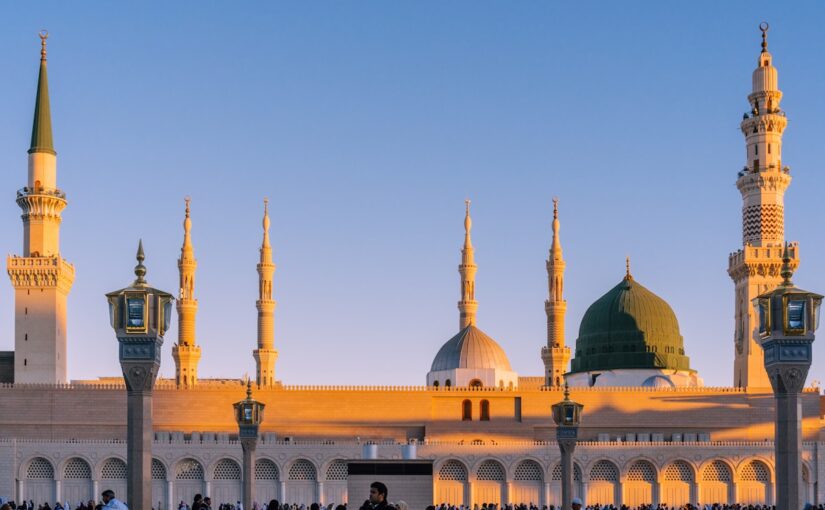
“Dil Mein Hai Shauq-e-Madina” (دل میں ہے شوقِ مدینہ) is a beloved Urdu naat that beautifully expresses the deep longing and spiritual desire to visit the blessed city of Madinah Munawwarah. The title translates to “The Yearning for Madinah is in My Heart.” This soul-stirring naat has captured the hearts of millions and is recited at Milad gatherings, naat competitions, and in homes around the world.
The Meaning of “Dil Mein Hai Shauq-e-Madina”
“Dil Mein Hai Shauq-e-Madina” is a heartfelt expression of a believer’s yearning to visit the city of Prophet Muhammad ﷺ. The naat speaks about the magnetic pull that Madinah has on the hearts of the faithful — a city that houses Masjid al-Nabawi, the Prophet’s ﷺ mosque, and his blessed resting place. The poet beautifully articulates the pain of separation and the hope of one day being blessed with a visit to this holy city.
This naat resonates deeply because every Muslim shares this longing. Madinah is not just a city — it is a spiritual home, a place where the Prophet ﷺ lived, taught, and is buried. To visit Madinah is to feel closer to him, to walk where he walked, and to pray in his mosque.
Urdu Lyrics — دل میں ہے شوقِ مدینہ
Below are the full Urdu lyrics of “Dil Mein Hai Shauq-e-Madina” in beautiful Nastaliq script.
دل میں ہے شوقِ مدینہ دل میں ہے شوقِ مدینہ
یا نبی مجھ کو بلا لو یا نبی مجھ کو بلا لو
میری آنکھوں میں بسا ہے مدینے کا نظارہ
ہے مرے دل میں سماں مدینے کا وہ تارہ
دل میں ہے شوقِ مدینہ دل میں ہے شوقِ مدینہ
یا نبی مجھ کو بلا لو یا نبی مجھ کو بلا لو
مدینے کے در و دیوار پہ ہے رونق ایسی
کہ جیسے جنت سے آئی ہو کوئی ہوائے بسی
دل میں ہے شوقِ مدینہ دل میں ہے شوقِ مدینہ
یا نبی مجھ کو بلا لو یا نبی مجھ کو بلا لو
جہاں روضہ ہے نبی کا وہ پاک مقام
وہیں دل کا سکون اور روح کا آرام
دل میں ہے شوقِ مدینہ دل میں ہے شوقِ مدینہ
یا نبی مجھ کو بلا لو یا نبی مجھ کو بلا لو
مدینے کے گلیوں میں پھولوں کی خوشبو ہے
یہاں ہر ذرے میں اپنے نبی کا عکس ہے
دل میں ہے شوقِ مدینہ دل میں ہے شوقِ مدینہ
یا نبی مجھ کو بلا لو یا نبی مجھ کو بلا لو
مجھے محروم نہ کرنا مدینے کے در سے
یہ التجا ہے مری اے خدا بلا لو مجھے
دل میں ہے شوقِ مدینہ دل میں ہے شوقِ مدینہ
یا نبی مجھ کو بلا لو یا نبی مجھ کو بلا لو
Roman Urdu Transliteration
Here is the Roman Urdu transliteration for those who wish to recite the naat but cannot read the Urdu script:
Verse 1:
Dil mein hai shauq-e-Madina, dil mein hai shauq-e-Madina
Ya Nabi mujh ko bula lo, ya Nabi mujh ko bula lo
Verse 2:
Meri aankhon mein basa hai Madine ka nazaara
Hai mere dil mein samaa Madine ka woh taara
Chorus:
Dil mein hai shauq-e-Madina, dil mein hai shauq-e-Madina
Ya Nabi mujh ko bula lo, ya Nabi mujh ko bula lo
Verse 3:
Madine ke dar-o-diwaar par hai roonaq aisi
Ke jaise Jannat se aayi ho koi hawa-e-basee
Chorus:
Dil mein hai shauq-e-Madina, dil mein hai shauq-e-Madina
Ya Nabi mujh ko bula lo, ya Nabi mujh ko bula lo
Verse 4:
Jahan rozah hai Nabi ka woh paak muqaam
Wahin dil ka sukoon aur rooh ka aaraam
Chorus:
Dil mein hai shauq-e-Madina, dil mein hai shauq-e-Madina
Ya Nabi mujh ko bula lo, ya Nabi mujh ko bula lo
Verse 5:
Madine ki galiyon mein phoolon ki khushbu hai
Yahan har zarre mein apne Nabi ka aks hai
Chorus:
Dil mein hai shauq-e-Madina, dil mein hai shauq-e-Madina
Ya Nabi mujh ko bula lo, ya Nabi mujh ko bula lo
Verse 6:
Mujhe mahroom na karna Madine ke dar se
Yeh iltija hai meri, ae Khuda, bula lo mujhe
Final Chorus:
Dil mein hai shauq-e-Madina, dil mein hai shauq-e-Madina
Ya Nabi mujh ko bula lo, ya Nabi mujh ko bula lo
English Translation — Verse by Verse
Verse 1:
The yearning for Madinah is in my heart, the yearning for Madinah is in my heart
O Prophet, call me to You, O Prophet, call me to You
Verse 2:
The sight of Madinah resides in my eyes
That star of Madinah shines within my heart
Verse 3:
The walls and doors of Madinah have such a beautiful radiance
As if a gentle breeze has arrived from Paradise itself
Verse 4:
Where the blessed tomb of the Prophet lies — that sacred place
There is the peace of the heart and the rest of the soul
Verse 5:
The streets of Madinah are filled with the fragrance of flowers
In every particle here reflects my beloved Prophet
Verse 6:
Do not deprive me of the doorstep of Madinah
This is my humble plea — O Allah, call me there
Background and Significance
“Dil Mein Hai Shauq-e-Madina” belongs to the rich tradition of Urdu naats that focus on the theme of ishq-e-Mustafa (love for the Prophet ﷺ) and shauq-e-Madina (yearning for Madinah). This naat is particularly powerful because it articulates a feeling that every believer carries in their heart — the longing to stand in the blessed city, to pray in Masjid al-Nabawi, and to send salutations upon the Prophet ﷺ at his blessed Rawdah.
The naat uses the metaphor of a lover yearning for their beloved to describe the spiritual bond between the believer and Madinah. The repeated refrain — “Dil mein hai shauq-e-Madina” — serves as a mantra of love, reinforcing the central message that Madinah is never far from a believer’s thoughts.
In Islamic spirituality, Madinah holds a unique status. It was the city that welcomed the Prophet ﷺ after his migration (Hijrah) from Makkah, the place where the first Islamic community was established, and the site of Masjid al-Nabawi — the second holiest mosque in Islam. The Prophet ﷺ said: “Between my house and my pulpit is a garden from the gardens of Paradise” (Bukhari, Muslim). This makes the desire to visit Madinah not just a physical journey but a spiritual one.
Popular Reciters
“Dil Mein Hai Shauq-e-Madina” has been beautifully rendered by several renowned naat khwans including:
- Owais Raza Qadri — His soulful rendition is one of the most popular versions
- Hafiz Tahir Qadri — Known for his emotional and powerful delivery
- Qari Shahid Qadri — His melodious voice adds a unique beauty to this naat
- Farhan Ali Qadri — A touching rendition loved by millions
Why This Naat Touches the Heart
What makes “Dil Mein Hai Shauq-e-Madina” so beloved is its simplicity and sincerity. It does not use complex poetic devices or obscure vocabulary. Instead, it speaks directly from the heart — the longing of a believer who has never seen Madinah but loves it more than any place on earth. This is a feeling shared by Muslims across every culture and continent.
The naat also serves as a prayer (dua). When the poet says “Ya Nabi mujh ko bula lo” (O Prophet, call me), it is not just poetry — it is a supplication, a humble request to be counted among those blessed to visit the Prophet’s ﷺ city. Every recitation becomes an act of worship and a renewal of this heartfelt wish.
More Naats About Madinah
If you enjoyed “Dil Mein Hai Shauq-e-Madina,” you may also like these beautiful naats about Madinah and the Prophet ﷺ:
- Sallallahu Alaihi Wasallam (صل اللہ علیہ وسلم) — Naat Lyrics and Translation — A beautiful praise of the Prophet ﷺ
- Salam Ya Mustafa (السلام علیک یا مصطفیٰ) — Naat Lyrics and Translation — A classic greeting of peace to the Prophet ﷺ
- Tajdar-e-Haram (تاجدار حرم) — Naat Lyrics and Translation — Praising the Crown of the Sanctuary
- Ya Nabi Salam Alayka (یا نبی سلام علیک) — Naat Lyrics and Translation — A beloved Arabic naat
- Mere Maula (میرے مولا) — Naat Lyrics and Translation — A heartfelt prayer to the Lord
Conclusion
“Dil Mein Hai Shauq-e-Madina” is more than just a naat — it is the voice of every Muslim heart that yearns for the blessed city of the Prophet ﷺ. Its simple yet profound lyrics remind us that Madinah is not just a destination on a map, but a spiritual home that calls to every believer. May Allah bless us all with the opportunity to visit Madinah Munawwarah and pray in Masjid al-Nabawi. Ameen.
If you found this article meaningful, share it with others who love the Prophet ﷺ and Madinah. Let the yearning for Madinah spread from heart to heart.