
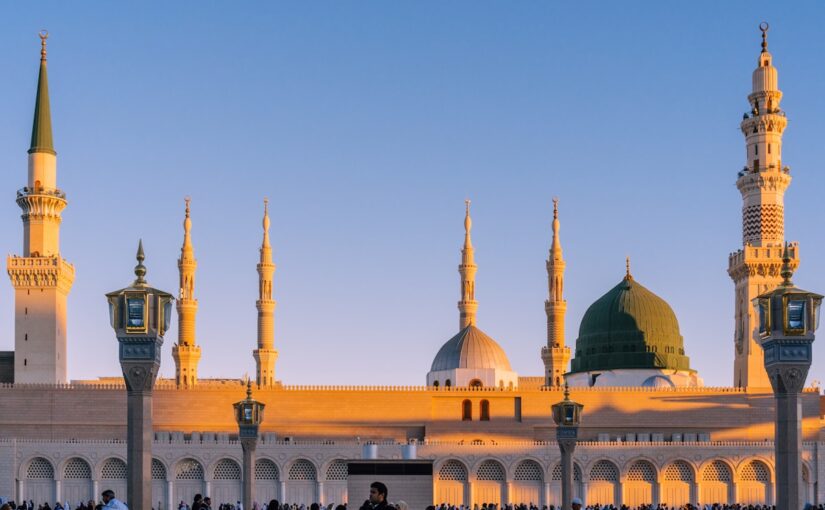
# Bhej De Koi Madine (بھیج دے کوئی مدینے) — Full Naat Lyrics, Translation & Meaning
**Category:** Islamic Naats
**Status:** Publish
—
## 📝 Article Content
**Title:** Bhej De Koi Madine (بھیج دے کوئی مدینے) — Full Naat Lyrics in Urdu, English Translation and Meaning
**Slug:** bhej-de-koi-madine-naat-lyrics
—
### Introduction
“Bhej De Koi Madine” (بھیج دے کوئی مدینے) is a soul-stirring Urdu naat that expresses the deep longing of a believer’s heart to visit the blessed city of Madinah Munawwarah and stand in the presence of the Holy Prophet Muhammad ﷺ. The phrase “Bhej De Koi Madine” translates to “Send someone to Madinah” — a heartfelt plea, a cry from the depths of a soul that aches for the sanctuary of the Prophet’s ﷺ city.
This naat captures the universal emotion of every Muslim who yearns to perform Ziyarat (visitation) of Rawdat-ul-Jannah, the sacred garden between the Prophet’s ﷺ pulpit and his blessed grave. It speaks of a love that transcends time and space — the love for Rasoolullah ﷺ and his blessed city.
In this article, we present the full Urdu lyrics of “Bhej De Koi Madine” in beautiful Nastaliq script, along with a line-by-line English translation and transliteration. We also explore the deeper meaning and spiritual significance behind the words.
—
### 🌙 Full Naat: Bhej De Koi Madine (بھیج دے کوئی مدینے)
#### Verse 1
**Urdu (Nastaliq):**
بھیج دے کوئی مدینے مجھے جانا ہے
دل مرا روضۂؑ پاک پہ قربان کروں
**Transliteration:**
Bhej de koi madine mujhe jaana hai
Dil mera rozah-e-paak pe qurban karoon
**English Translation:**
Send someone to Madinah — I must go,
I wish to sacrifice my heart at the sacred shrine.
**Explanation:**
The poet begins with an urgent plea — “Bhej de koi madine” — as if calling out to someone, anyone, to arrange a way to reach Madinah. This opening line instantly establishes the theme of longing and desperation. The second line reveals the intent: to sacrifice one’s heart (dil) at the sacred rawdah (shrine) of the Prophet ﷺ. This is not a physical sacrifice but an emotional and spiritual one — offering one’s entire being, love, and ego at the blessed resting place of Rasoolullah ﷺ. The word “qurban” (sacrifice) is loaded with Islamic significance, echoing the spirit of complete submission.
—
#### Verse 2
**Urdu (Nastaliq):**
میرے آقا کی زمیں پہ جو قدم رکھ دوں
سجدۂ شکر بجا لاؤں، ربّ کا شکر کروں
**Transliteration:**
Mere aaqa ki zameen pe jo qadam rakh doon
Sajda-e-shukr baja laaun, Rabb ka shukar karoon
**English Translation:**
When I place my foot upon the land of my Master,
I shall perform a prostration of gratitude and thank my Lord.
**Explanation:**
The poet imagines the moment of arrival — stepping onto the soil that belongs to their beloved Master (Aaqa), a reference to Prophet Muhammad ﷺ. The imagery here is powerful: the land of Madinah is not ordinary soil; it is sacred earth blessed by the footsteps of the Prophet ﷺ and his companions. Upon touching it, the poet promises to perform “Sajda-e-Shukr” — a prostration of thanks to Allah for granting this privilege. This reflects the Islamic tradition of offering two rak’ahs or a sajdah upon reaching a blessed destination, a practice rooted in gratitude.
—
#### Verse 3
**Urdu (Nastaliq):**
کاش اک بار مجھے دید کا موقع مل جائے
آقا کے در پہ جھکا دے کوئی — میں کیا کروں
**Transliteration:**
Kaash ek baar mujhe deed ka mauqa mil jaaye
Aaqa ke dar pe jhuka de koi — main kya karoon
**English Translation:**
If only once I get the chance to see [the Beloved],
May someone bow me at the Master’s door — what can I do?
**Explanation:**
“Deed” refers to the blessed vision — seeing the sacred resting place or, in the spiritual realm, seeing the Prophet ﷺ himself. The poet’s wish is humble: just one chance. The second line carries a beautiful sense of helplessness — “main kya karoon” (what can I do) — acknowledging that even this desire is not within one’s own power. It is a gift, a grace that must be granted. The poet asks someone (koi) to physically bow their head at the Prophet’s ﷺ door, highlighting the humility required to enter that sacred presence.
—
#### Verse 4
**Urdu (Nastaliq):**
روضۂ اطہر پہ ڈھلکوں تو سکون آئے
نور کے گنبد سے لپٹ کر میں پکاروں یوں
**Transliteration:**
Rozah-e-at-har pe dhalakoon to sakoon aaye
Noor ke gumbad se lipt kar main pukaaron yoon
**English Translation:**
If I could pour myself upon the pure shrine, peace would come,
Clinging to the dome of light, I would call out thus.
**Explanation:**
“Rozah-e-at-har” means the most pure and sacred shrine. The poet uses the verb “dhalakoon” (to pour or melt), suggesting complete surrender — melting like water onto the blessed rawdah. There is an intense longing for peace (sukoon), which the poet believes can only be found in that sacred space. The “Noor ke gumbad” (dome of light) refers to the iconic Green Dome of Masjid an-Nabawi, which is historically and spiritually renowned. Clinging to it and calling out represents a soul seeking connection, much like a child holding onto their parent.
—
#### Verse 5
**Urdu (Nastaliq):**
آپ کی رحمت کے دریا میں بہا جا دوں
آپ کے در کا میں گدا بن کے جیا چاہوں
**Transliteration:**
Aap ki rehmat ke dariya mein baha ja doon
Aap ke dar ka main gada ban ke jiya chaahoon
**English Translation:**
Let me flow in the river of Your mercy,
I wish to live as a beggar at Your door.
**Explanation:**
The poet now directly addresses the Prophet ﷺ with “Aap” (You, in respectful form). The metaphor of the “river of mercy” (rehmat ka dariya) is deeply evocative — Prophet Muhammad ﷺ is described in the Quran as “Rahmatul lil-Alameen” (a mercy to all worlds). The poet wishes to drown in that mercy. The second line adopts the persona of a beggar (gada) at the Prophet’s ﷺ door — not asking for wealth or status, but simply to exist in that blessed proximity. This echoes the Sufi concept of faqr (spiritual poverty), where being a beggar at the Beloved’s door is the highest station.
—
#### Verse 6
**Urdu (Nastaliq):**
اے مدینے کے سکوں والے مسافر مجھ کو
اپنے ساتھ وہاں لے چلو — بھیج دو کسی کو
**Transliteration:**
Aye Madine ke sukoon waale musaafir mujh ko
Apne saath wahan le chalo — bhej do kisi ko
**English Translation:**
O traveler who has found peace in Madinah,
Take me along with you — send someone [for me].
**Explanation:**
Here, the poet addresses those blessed souls who have already journeyed to Madinah and experienced its peace (sukoon). There is both admiration and gentle envy — “sukoon waale musaafir” (traveler graced with tranquility). The poet pleads to be taken along or, failing that, asks them to arrange a way. This verse beautifully captures the sentiment felt by those who have not yet visited Madinah: the urge to ask everyone who returns, “How was it? Take me next time.” It’s the universal language of love for the Prophet’s ﷺ city.
—
#### Verse 7
**Urdu (Nastaliq):**
عمر بھر کا ہے یہ ارمان، مدینے جا کر
دو گھڑی آقا کے قدموں میں بسر کر لوں
**Transliteration:**
Umar bhar ka ye armaan, Madine ja kar
Do ghadi aaqa ke qadmo mein basar kar loon
**English Translation:**
This is a lifelong aspiration — to go to Madinah,
And spend just two moments at the feet of my Master.
**Explanation:**
“Armaan” means desire or aspiration, and the poet declares this to be a “umar bhar ka armaan” — a lifelong dream. The request is remarkably modest: just “do ghadi” (two moments, a brief instant) at the Prophet’s ﷺ feet. This teaches a beautiful spiritual lesson: the greatest blessings don’t require extensive time. Even a single moment of sincere connection with the Beloved can fulfill a lifetime of longing. Quality of presence matters more than quantity.
—
### 📖 The Deeper Meaning
“Bhej De Koi Madine” is more than just a naat — it’s a reflection of the Islamic concept of **Shawq** (spiritual longing) and **Ishq-e-Mustafa** (love for the Prophet ﷺ). The constant repetition of requests to be sent to Madinah reflects a soul that feels incomplete without visiting the city of the Prophet ﷺ.
In Islamic spirituality, the love for Madinah is inseparable from the love for Prophet Muhammad ﷺ. The Quran commands believers to love Allah and His Messenger above all else (Surah At-Tawbah 9:24). Visiting Madinah and performing Ziyarat of the Prophet’s ﷺ grave is considered one of the greatest acts of devotion. The Prophet ﷺ himself said: “Whoever visits my grave after my death is like those who visited me during my lifetime” (Darqutni).
The naat draws heavily on the rich tradition of **Madih** (praise poetry), which has been an integral part of Islamic culture since the time of the Sahaba. Poets like Hassan ibn Thabit (رضی اللہ عنہ) set the precedent for expressing love for the Prophet ﷺ through poetry, a tradition that continues today in naat gatherings, Mehfil-e-Milaad, and Qawwali performances worldwide.
Each verse reflects a different dimension of this love:
– **Verse 1-2:** The anticipation and gratitude of reaching Madinah
– **Verse 3-4:** The helpless yearning and desire for spiritual connection
– **Verse 5:** Complete surrender to the Prophet’s ﷺ mercy
– **Verse 6:** The community aspect — sharing the blessing with others
– **Verse 7:** The ultimate humility — asking for so little
—
### 🕌 When to Recite This Naat
This naat is particularly suitable for:
– **Mehfil-e-Milaad / Milad un-Nabi gatherings** — celebrating the birth of the Prophet ﷺ
– **Travelers preparing for Umrah/Hajj** — especially before visiting Madinah
– **Friday evenings** — a blessed time for sending salutations upon the Prophet ﷺ
– **Daily dhikr routines** — as a way to maintain connection with the Prophet ﷺ
– **Emotional moments of longing** — when the heart feels distant and seeks spiritual proximity
—
### 🔖 Tags / Keywords
– Bhej De Koi Madine lyrics
– بھیج دے کوئی مدینے
– Bhej De Koi Madine naat
– Bhej De Koi Madine translation English
– Urdu naat lyrics
– Islamic naats collection
– Naat about Madinah
– Madinah Munawwarah poetry
– Prophet Muhammad ﷺ naat
– Islamic devotional poetry
– Best Urdu naats
– Naat lyrics in Urdu
– Madinah naat with translation
– Ishq-e-Mustafa naat
– Shawq-e-Madinah naat
—
### 📌 FAQs
**Q: Who wrote “Bhej De Koi Madine”?**
A: This naat is a traditional Urdu composition by an anonymous poet, commonly recited in Mehfil-e-Milaad gatherings across South Asia.
**Q: What is the meaning of “Bhej De Koi Madine”?**
A: It means “Send someone to Madinah” — a heartfelt plea to be taken to the blessed city of the Prophet ﷺ.
**Q: Is this naat suitable for Hajj/Umrah travel?**
A: Yes, this naat beautifully captures the emotions of someone preparing to visit Madinah during Hajj or Umrah.
**Q: What language is this naat in?**
A: The naat is in Urdu, written in Nastaliq script. We also provide transliteration and English translation.
—
### Final Words
“Bhej De Koi Madine” reminds us that the love for Prophet Muhammad ﷺ is alive in the hearts of millions. It is a love that defies borders, languages, and centuries. The desire to visit Madinah and stand at the Rawdah is a dream shared by believers across the globe.
May Allah grant us all the opportunity to visit Madinah Munawwarah and honor us with Ziyarat of the Beloved Prophet ﷺ. Ameen.
*”Bhej de koi madine mujhe jaana hai…”*