
Khush Amdeed Mustafa (خوش آمدید مصطفیٰ) — Full Naat Lyrics in Urdu, English Translation and Meaning
“Khush Amdeed Mustafa” (خوش آمدید مصطفیٰ) is a beautiful and heartfelt naat that welcomes the beloved Prophet Muhammad (peace be upon him). The phrase “Khush Amdeed” is an Urdu-Persian greeting that means “welcome.” This naat is often recited during gatherings of praise for the Prophet, especially on occasions such as Eid Milad-un-Nabi and other Islamic celebrations. Its melody is uplifting, and its words express deep love and devotion for the final messenger of Allah.
Below you will find the full lyrics of this naat in Urdu, along with a transliteration, an English translation, and an explanation of its meaning and background.
Background of the Naat
“Khush Amdeed Mustafa” is a modern naat that has gained popularity across South Asia. It is performed by various notable naat khwans. The poetry celebrates the arrival and presence of Prophet Muhammad (PBUH) as a mercy to all worlds. The naat uses the imagery of flowers blooming, hearts lighting up, and the universe rejoicing at the Prophet’s presence. It is a naat of joy, welcome, and celebration, which is why it is frequently chosen for Milad gatherings and spiritual conferences.
Khush Amdeed Mustafa — Urdu Lyrics (خوش آمدید مصطفیٰ)
Verse 1:
خوش آمدید مصطفیٰ
خوش آمدید مصطفیٰ
ہر دل میں ہے آرزو
ہر دل میں ہے آرزو
دیکھیں ترا دیدار
دیکھیں ترا دیدار
اے نورِ مجسم تجھ کو
ہم سے ہے پیار
Verse 2:
پھولوں نے بکھر کر کہا
پھولوں نے بکھر کر کہا
سب نے مل کر یہ کہا
سب نے مل کر یہ کہا
خوش آمدید اے شہہ
خوش آمدید اے شہہ
مٹی نے بھی یہ کہا
خاکِ مدینہ ہے بہتر
Verse 3:
جلتے ہیں چراغ دل کے
جلتے ہیں چراغ دل کے
ہر گلی میں ہے چراغاں
ہر گلی میں ہے چراغاں
آئی ہے بہار آئی
آئی ہے بہار آئی
آنکھوں میں ہے ساماں
آنکھوں میں ہے ساماں
Verse 4:
اے شہہ ہم کو بھی اپنی
اے شہہ ہم کو بھی اپنی
نظر میں جگہ دے دے
نظر میں جگہ دے دے
ہم پیاسے ہیں تیرے
ہم پیاسے ہیں تیرے
دریا کو کنارہ دے دے
دریا کو کنارہ دے دے
English Transliteration
Verse 1:
Khush amdeed Mustafa
Khush amdeed Mustafa
Har dil mein hai aarzu
Har dil mein hai aarzu
Dekhein tera didaar
Dekhein tera didaar
Aye Noor-e-mujassam tujh ko
Hum se hai pyaar
Verse 2:
Phoolon ne bikhar ke kaha
Phoolon ne bikhar ke kaha
Sab ne mil kar ye kaha
Sab ne mil kar ye kaha
Khush amdeed aye shah
Khush amdeed aye shah
Mitti ne bhi ye kaha
Khaak-e-Madina hai behtar
Verse 3:
Jalte hain charagh dil ke
Jalte hain charagh dil ke
Har gali mein hai charaghan
Har gali mein hai charaghan
Aayi hai bahaar aayi
Aayi hai bahaar aayi
Aankhon mein hai saamaan
Aankhon mein hai saamaan
Verse 4:
Aye shah hum ko bhi apni
Aye shah hum ko bhi apni
Nazar mein jagah de de
Nazar mein jagah de de
Hum pyaase hain tere
Hum pyaase hain tere
Dariya ko kinaara de de
Dariya ko kinaara de de
English Translation
Verse 1:
Welcome, O Mustafa (the Chosen One)
Welcome, O Mustafa
Every heart yearns
Every heart yearns
To behold Your blessed sight
To behold Your blessed sight
O embodiment of divine light
You love us, and we love You
Verse 2:
The flowers bloomed and said
The flowers bloomed and said
Everyone together proclaimed
Everyone together proclaimed
Welcome, O King
Welcome, O King
Even the dust declared
The soil of Madina is superior to all
Verse 3:
The lamps of the heart are lit
The lamps of the heart are lit
Every street is illuminated
Every street is illuminated
Spring has arrived, spring has arrived
Spring has arrived, spring has arrived
Our eyes are filled with beauty
Our eyes are filled with beauty
Verse 4:
O King, grant us too
O King, grant us too
A place within Your gracious gaze
A place within Your gracious gaze
We are thirsty for You
We are thirsty for You
Grant the river its shore
Grant the river its shore
Meaning and Spiritual Significance
“Khush Amdeed Mustafa” is a naat of spiritual welcome. It describes the joy that fills the universe when the Prophet Muhammad (PBUH) is present. The first verse speaks of the longing in every heart to see the Prophet’s blessed face. It calls him “Noor-e-Mujassam,” meaning the embodiment of light, a phrase that reflects the Islamic belief that the Prophet was created from divine light (Nur).
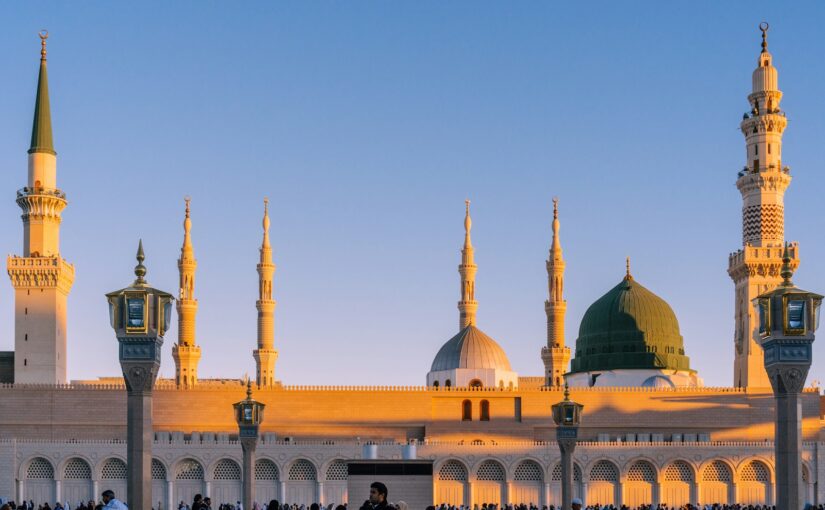
The second verse uses beautiful natural imagery. Flowers bloom and speak. The earth itself declares its reverence. The “soil of Madina” is mentioned as being superior because it is blessed by the Prophet’s presence. This reflects the deep love Muslims have for the city of Madina, where the Prophet is buried and where he spent the final years of his life.
The third verse speaks of illumination. Lamps are lit both literally (in streets during celebrations) and metaphorically (in hearts filled with faith). Spring is used as a metaphor for spiritual renewal. When love for the Prophet enters a heart, it is like spring bringing life to a barren land.
The final verse is a humble plea. The poet asks the Prophet to grant them a place in his gracious gaze. To be “thirsty” for the Prophet means to be spiritually yearning for his intercession and nearness. The line “grant the river its shore” is a poetic way of saying: let us reach our destination, let our spiritual journey find its rest in you.
When Is This Naat Recited?
“Khush Amdeed Mustafa” is particularly popular during:
- Eid Milad-un-Nabi (12th Rabi-ul-Awwal): Celebrations of the Prophet’s birth often open with welcoming naats like this one.
- Urs and spiritual gatherings: Sufi gatherings and dargah events frequently include this naat.
- Daily spiritual practice: Many Muslims recite this naat in their morning or evening routines as a form of salawat and meditation.
- Conferences and Islamic events: It is often the opening or closing recitation at Islamic conferences in South Asia and the UK.
The naat’s rhythmic structure makes it easy to memorise, and its joyful tone makes it suitable for both solo recitation and group performance. If you are looking to learn more naats, you may also enjoy our pages on Mera Dil Tujh Hi Se Lagaya and Rahmatun Lil Alameen.
Frequently Asked Questions
Who wrote Khush Amdeed Mustafa?
The exact poet is not widely documented, but the naat is popularised through performances by various contemporary naat khwans. Its style fits within the modern tradition of Urdu naat poetry.
Is Khush Amdeed Mustafa a famous naat?
Yes, it is well known in South Asian Islamic circles and is often recited at Milad gatherings. Its joyful melody makes it a favourite among children and adults alike.
Can I use these lyrics for my own video or recording?
Yes, the lyrics are a devotional composition shared for spiritual benefit. You are welcome to use them in your own recitations or videos as long as credit is given and the words are not altered.
You can also explore other naats on our site such as Noor Wala Aaya Hai and Dil Mein Hai Shauq-e-Madina.