
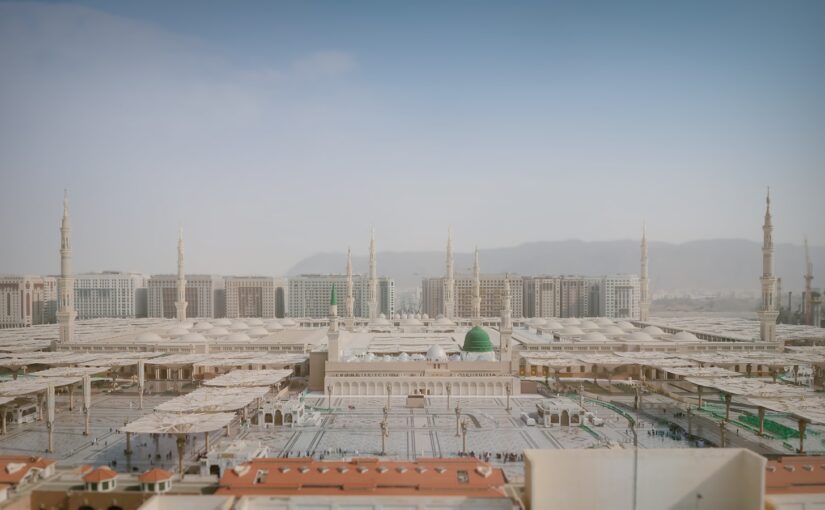
Sarkar Ka Madina (سرکار کا مدینہ) is one of the most beloved and widely recited Islamic naats in the Urdu-speaking world. Written and popularized by renowned naat reciters, this naat beautifully describes the spiritual beauty of Madina Munawwarah, the city of the Prophet Muhammad (peace be upon him). The phrase “Sarkar Ka Madina” translates to “The Madina of the Master” — referring to the blessed city that surrounds Masjid an-Nabawi, the mosque of Prophet Muhammad (PBUH).
This naat captures the deep love and longing that Muslims feel for Madina. Every stanza paints a vivid picture of the Green Dome, the illuminated minarets, the golden grill (Sunehri Jaali), and the sacred earth that holds the graves of the Prophet (PBUH) and his noble companions. The naat expresses the heartfelt wish of every believer: to have Madina as their final resting place.
The Background of Sarkar Ka Madina Naat
While the exact origins of this naat are traced to traditional Islamic poetry praising Madina, it gained widespread fame through the soulful renditions by Owais Raza Qadri and other prominent naat khwans. The naat draws on centuries of Islamic poetic tradition that venerates Madina as a city of light, mercy, and spiritual refuge.
Madina holds a special place in every Muslim’s heart. It was the city that welcomed the Prophet (PBUH) during the Hijrah, became the first Islamic state, and houses his blessed resting place beneath the Green Dome. This naat beautifully articulates the universal yearning of Muslims to visit and dwell in this sacred city.
Sarkar Ka Madina — Urdu Lyrics (اردو اشعار)
Here are the complete Urdu lyrics of the naat Sarkar Ka Madina in proper Urdu script:
عشاق کا ہے پیارا سرکار کا مدینہ
ہر آنکھ کا ہے تارا سرکار کا مدینہ
دیکھی سنہری جالی، محراب ان کا منبر
جنت کا ہے نظارہ سرکار کا مدینہ
گنبد مینار ان کے کیا خوب لگ رہے ہیں
خلدِ بریں کا نقشہ سرکار کا مدینہ
جس کو یقین نہ آئے طیبہ وہ دیکھ آئے
جنت سے جیسے اترا سرکار کا مدینہ
دامن میں ہیں احد کے، تربت یہ کیا نرالی
مدفن میں ہے اس کے حمزہ سرکار کا مدینہ
واں حاجیوں کا جانا، یاں عاصیوں کا آنا
ہے کعبہ کا بھی کعبہ سرکار کا مدینہ
انوار ہیں برستے شام و سحر یہاں پر
ہیں کس قدر سہانا سرکار کا مدینہ
سرکار کی گلی میں گر موت آ گئی تو
بخشش کا ہے سہارا سرکار کا مدینہ
اے کاش موت ہم کو طیبہ نگر میں آئے
بنے آخری ٹھکانہ سرکار کا مدینہ
حسنین و فاطمہ کے، مولا علی کے صدقے
رہے یوں ہی آنا جانا سرکار کا مدینہ
رضوان کی دعا ہے، احمد کی التجا ہے
بنے آخری ٹھکانہ سرکار کا مدینہ
جاؤں مدینہ پھر سے یہ آرزو دلی ہے
احمد کا ہو ٹھکانہ سرکار کا مدینہ
Sarkar Ka Madina — English Translation (Stanza by Stanza)
Verse 1:
Ushaaq Ka Hai Pyara Sarkaar Ka Madina
Har Aankh Ka Hai Taara Sarkaar Ka Madina
Translation: Beloved to the lovers (of the Prophet) is the Madina of the Master
The star of every eye is the Madina of the Master
Verse 2:
Dekhi Sunehri Jaali, Mehraab Unka Mimbar
Jannat Ka Hai Nazaara Sarkaar Ka Madina
Translation: See the golden grill, the prayer niche, and the pulpit
It is a scene of Paradise — the Madina of the Master
Verse 3:
Gunbad Minaar Unke Kya Khoob Lag Rahe Hai
Khuld-e-Bari Ka Naqsha Sarkaar Ka Madina
Translation: How beautifully his dome and minarets appear
It is a blueprint of the Eternal Paradise — the Madina of the Master
Verse 4:
Jis Ko Yaqeen Na Aaye Taiba Woh Dekh Aaye
Jannat Se Jaise Utra Sarkaar Ka Madina
Translation: Whoever does not believe, let them come and see Taybah
As if Paradise itself has descended — the Madina of the Master
Verse 5:
Daaman Mein Hain Uhad Ke, Turbat Ye Kya Niraali
Madfan Mein Hai Iske Hamza Sarkaar Ka Madina
Translation: In its skirt lies Mount Uhud, what a unique burial ground
Hamza (the Prophet’s uncle) rests in its earth — the Madina of the Master
Verse 6:
Waan Hajiyon Ka Jaana, Yaan Aasiyon Ka Aana
Hai Kaabe Ka Bhi Kaaba Sarkaar Ka Madina
Translation: There the pilgrims go, here the sinners come
Even the Kaaba has its own Kaaba — the Madina of the Master
Verse 7:
Anwaar Hai Baraste Shaam-o-Sahar Yahan Par
Hain Kis Qadar Suhana Sarkaar Ka Madina
Translation: Lights are showering here, morning and evening
How delightful it is — the Madina of the Master
Verse 8:
Sarkaar Ki Gali Mein Gar Maut Aa Gayi To
Bakhshish Ka Hai Sahara Sarkaar Ka Madina
Translation: If death comes to me in the street of the Master
It is a support for forgiveness — the Madina of the Master
Verse 9:
Aye Kaash Maut Humko Taibe Nagar Mein Aaye
Bane Aakhri Thikana Sarkaar Ka Madina
Translation: O, I wish that death comes to me in the city of Taybah
May my final resting place be — the Madina of the Master
Verse 10:
Hasnain O Fatima Ke, Maula Ali Ke Sadqe
Rahe Yun Hi Aana Jaana Sarkaar Ka Madina
Translation: For the sake of Hasan, Hussain, Fatima, and Maula Ali
May I keep coming and going to — the Madina of the Master
Verse 11:
Rizwan Ki Dua Hai, Ahmad Ki Iltija Hai
Bane Aakhri Thikana Sarkaar Ka Madina
Translation: This is the prayer of Rizwan, this is the plea of Ahmad
May my final abode be — the Madina of the Master
Verse 12:
Jaau Madine Phir Se Ye Aarzoo Dili Hai
Ahmad Ka Ho Thikana Sarkaar Ka Madina
Translation: My heart’s deepest desire is to go to Madina once more
May Ahmad’s resting place be — the Madina of the Master
The Meaning and Spiritual Significance
The naat Sarkar Ka Madina is more than poetry — it is a heartfelt expression of a believer’s spiritual connection to the Prophet Muhammad (PBUH) and his city. Every verse reflects the deep-rooted love that Muslims across the world hold for Madina Munawwarah.
The opening verse establishes Madina as beloved to “the lovers” (ushaaq) — referring to those who love the Prophet (PBUH). This sets the tone for the entire naat, which is an outpouring of love and devotion. The “golden grill” (Sunehri Jaali) mentioned in the second verse refers to the beautiful golden lattice that surrounds the Rawdah — the sacred area between the Prophet’s pulpit and his house, described by the Prophet himself as “a garden from the gardens of Paradise.”
The mention of Mount Uhud and Hazrat Hamza (RA) connects the beauty of Madina with the sacrifices made by early Muslims. Hazrat Hamza, the beloved uncle of the Prophet (PBUH), was martyred in the Battle of Uhud and is buried there. This adds a layer of historical and emotional depth to the naat.
One of the most powerful themes in this naat is the desire to die in Madina. The poet prays repeatedly for Madina to be the final resting place — a sentiment shared by countless Muslims. According to Islamic tradition, there is a special mercy for those who are buried in the sacred soil of Madina.
The verse that calls Madina “the Kaaba of the Kaaba” (Hai Kaabe Ka Bhi Kaaba) is particularly profound. While Makkah is the physical direction of prayer (Qibla), Madina holds the spiritual heart of Islam — the resting place of the Prophet (PBUH). This highlights the unique status of Madina in Islamic spirituality.
Why Sarkar Ka Madina is So Popular
Sarkar Ka Madina resonates deeply with Muslims because it captures the universal love for the Prophet (PBUH) and his city in simple yet profound words. The naat does not use complex Arabic phrases — it speaks directly to the heart in Urdu, making it accessible to millions of Urdu-speaking Muslims around the world.
The refrain “Sarkaar Ka Madina” repeated throughout the naat creates a hypnotic, meditative rhythm that allows listeners to immerse themselves in the spiritual atmosphere of Madina. It has been recited by numerous naat khwans including Owais Raza Qadri, and each rendition brings out the deep emotional connection to the blessed city.
May Allah grant us all the opportunity to visit Madina Munawwarah and may He make the sacred city of the Prophet (PBUH) our final resting place. Ameen.