
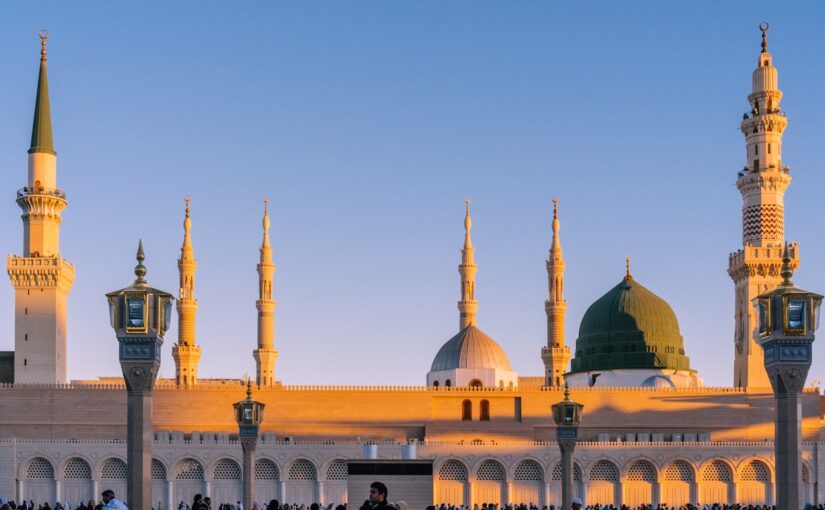
Introduction — Fida-e-Mustafa (فدائے مصطفیٰ)
Fida-e-Mustafa (Urdu: فدائے مصطفیٰ) is a deeply heartfelt and spiritually uplifting Urdu naat that expresses complete devotion and sacrifice for Prophet Muhammad ﷺ. The title translates to “Sacrifice for Mustafa” or “Devoted to Mustafa”, capturing the essence of unconditional love for the final Messenger of Allah.
The opening line — “Dono Aalam Jaan O Dil Se Hain Fidaaye Mustafa” — declares that both worlds (this world and the Hereafter), along with one’s life and heart, are a sacrifice for the Prophet ﷺ. This powerful verse sets the tone for a poem that beautifully weaves together themes of devotion, humility, and the unparalleled status of Prophet Muhammad ﷺ.
About the Poet — Khawaja Hameed al-Deen Shahid (خواجہ حمید الدین شاہد)
This beautiful naat was penned by the esteemed Urdu poet Khawaja Hameed al-Deen Shahid (خواجہ حمید الدین شاہد), a poet known for his profound love for the Prophet ﷺ and his mastery of Urdu nazm and naat composition. His poetry is characterized by its emotional depth, elegant phrasing, and the ability to convey the intense spiritual connection between a believer and the beloved Prophet.
Khawaja Hameed al-Deen Shahid’s naats have been recited across the world, resonating deeply with audiences who seek to express their love for the Prophet ﷺ through the beauty of Urdu poetry. “Fida-e-Mustafa” remains one of his most cherished compositions, frequently performed at mehfils (spiritual gatherings) and naat competitions.
Islamic Context: The Virtue of Praising the Prophet ﷺ
In the Islamic tradition, composing and reciting naat (poetry in praise of the Prophet Muhammad ﷺ) is considered a noble act of worship. The Prophet himself ﷺ encouraged poetry that glorifies Allah and praises his virtues. He famously said:
“Indeed, from poetry there is wisdom.” (Sahih al-Bukhari)
The great poet Hassan ibn Thabit (رضي الله عنه) was appointed by the Prophet ﷺ to respond to the poets of the Quraysh, and the Prophet prayed for him: “O Allah, support him with the Holy Spirit.” This tradition continues today through the beautiful art of naat khwani, which Fida-e-Mustafa exemplifies.
This naat encapsulates several core Islamic themes:
- Tawakkul (Trust in Allah) — Recognizing that love for the Prophet is a path to Allah’s pleasure
- Ishq-e-Mustafa (Love of the Prophet) — A central tenet of Islamic spirituality
- Humility before the Prophet — Acknowledging one’s lowliness compared to the Prophet’s lofty station
- The Hereafter — Seeking intercession and closeness to the Prophet in the next world
Full Urdu Lyrics — فدائے مصطفیٰ (دونوں عالم جان و دل سے ہیں فدائے مصطفیٰ)
دونوں عالم جان و دل سے ہیں فدائے مصطفیٰ
کتنی سادہ کتنی دلکش ہے ادائے مصطفیٰ
آپ کا ہوں، آپ کا ہوں، آپ کا ہوں یا بنی
ہو نہیں سکتا کسی کا آشنائے مصطفیٰ
اس سے بڑھ کر اور کیا ہو گی عطائے کردگار
لب پہ ہے نعتِ نبی، دل میں ولائے مصطفیٰ
بے نیاز قصر و ایوان، دشمنِ جاہ و حشم
فکرِ شاہاں، رشکِ سلطاں ہے گدائے مصطفیٰ
شاہد اس کی زندگی ہے باعثِ صد رشک و ناز
رات دن کرتا ہے دل سے جو ثنائے مصطفیٰ
Roman Transliteration
Dono Aalam Jaan O Dil Se Hain Fidaaye Mustafa
Both worlds, with life and heart, are a sacrifice for Mustafa
Kitni Saada, Kitni Dilkash Hai Adaaye Mustafa
How simple, how charming is the style of Mustafa
Aap Ka Hoon, Aap Ka Hoon, Aap Ka Hoon Ya Bani
I am Yours, I am Yours, I am Yours, O Prophet
Ho Nahin Sakta Kisi Ka Aashnaaye Mustafa
No one else can claim to be a companion of Mustafa
Is Se Barh Kar Aur Kya Ho Gi Ataaye Kirdaar
What greater gift of character can there be
Lab Par Hai Naat-e-Nabi, Dil Mein Walaaye Mustafa
Than having the Naat of the Prophet on one’s lips and love of Mustafa in the heart
Be Niaz Qasr O Aiwan, Dushman-e-Jaah O Hushum
Free from palaces and halls, enemy of status and grandeur
Fikr-e-Shaahan, Rishk-e-Sultan Hai Gadaaye Mustafa
The beggar of Mustafa is the concern of kings and the envy of emperors
Shaahid Us Ki Zindagi Hai Baais-e-Sadr Rishk O Naaz
Witness that the life of such a person is a cause of pride and envy
Raat Din Karta Hai Dil Se Jo Sanaaye Mustafa
Who praises Mustafa from the heart, day and night
English Translation — Line by Line
| Verse | Translation |
|---|---|
| Dono Aalam Jaan O Dil Se Hain Fidaaye Mustafa | Both worlds, with life and heart, are sacrificed for Mustafa |
| Kitni Saada, Kitni Dilkash Hai Adaaye Mustafa | How simple and how charming is the demeanor of Mustafa |
| Aap Ka Hoon, Aap Ka Hoon, Aap Ka Hoon Ya Bani | I belong to You, I belong to You, I belong to You, O Prophet |
| Ho Nahin Sakta Kisi Ka Aashnaaye Mustafa | No one can truly become an intimate companion of Mustafa (without complete devotion) |
| Is Se Barh Kar Aur Kya Ho Gi Ataaye Kirdaar | What greater gift of character could there be |
| Lab Par Hai Naat-e-Nabi, Dil Mein Walaaye Mustafa | Than having the Prophet’s praise on the lips and the love of Mustafa in the heart |
| Be Niaz Qasr O Aiwan, Dushman-e-Jaah O Hushum | Free from palaces and grand halls, adversary of rank and retinue |
| Fikr-e-Shaahan, Rishk-e-Sultan Hai Gadaaye Mustafa | The beggar of Mustafa is the anxiety of kings and the envy of emperors |
| Shaahid Us Ki Zindagi Hai Baais-e-Sadr Rishk O Naaz | Behold, the life of such a person becomes the source of all pride and jealously |
| Raat Din Karta Hai Dil Se Jo Sanaaye Mustafa | Who day and night, from the depths of the heart, recites the praises of Mustafa |
Meaning and Explanation — A Deep Dive
Stanza 1: The Universality of Devotion
The opening couplet declares that both worlds — the temporal world (duniya) and the eternal Hereafter (akhirah) — along with one’s very life (jaan) and heart (dil), are offered as a sacrifice (fida) for Prophet Muhammad ﷺ. The poet then marvels at the Prophet’s character, describing it as both simple (saada) and captivating (dilkash). This contrast reflects the unique nature of the Prophet ﷺ, who despite being the most exalted of creation, lived the simplest of lives.
Stanza 2: Total Belonging
The repeated declaration “Aap Ka Hoon” (I am Yours) three times emphasizes the totality of the poet’s belonging to the Prophet. Addressing him as “Ya Bani” (O Prophet), the poet asserts that such complete devotion leaves no room for any other allegiance. The word “Aashna” implies an intimate friend or companion — a status that cannot be attained without total submission and love.
Stanza 3: The Greatest Gift
The poet reflects on what the greatest gift (ataa) from the Creator (Kirdaar — referring to Allah) could be. The answer is profound: to have the praise of the Prophet (Naat-e-Nabi) on one’s lips and love of Mustafa (Walaaye Mustafa) embedded in one’s heart. This suggests that the ultimate spiritual blessing is not wealth, power, or status, but the constant remembrance and love of the Prophet ﷺ.
Stanza 4: The Dignity of Humility
The poet contrasts worldly grandeur with spiritual wealth. The true lover of the Prophet is unconcerned with palaces (qasr) and halls (aiwan) and is an enemy of status (jaah) and pomp (hasham). Paradoxically, the “beggar of Mustafa” (gadaaye Mustafa) becomes the object of kings’ concern (fikr-e-shaahan) and emperors’ envy (rishk-e-sultan). This echoes the famous Hadith: “Poverty is my pride” (faqri fakhri), highlighting the spiritual dignity found in humility.
Stanza 5: The Eternal Reward
In the final couplet, the poet signs off with his takhallus (pen name) “Shahid”, asserting that the life of one who sings the praises of Mustafa day and night becomes a witness (shaahid) to truth. Such a life becomes the very cause (baais) of pride (rishk) and honor (naaz), suggesting that devotion to the Prophet is not just a religious act but a transformative way of being that elevates one’s entire existence.
Virtues of Reciting This Naat
While no specific hadith mentions this particular poem, the act of reciting and reflecting upon naat carries immense spiritual benefits based on Islamic teachings:
- Strengthening Love for the Prophet ﷺ — Allah says in the Quran: “Say, [O Muhammad], ‘If you should love Allah, then follow me, [so] Allah will love you and forgive you your sins.'” (Quran 3:31). Reciting naat cultivates this love.
- Increased Blessings — Reciting praise of the Prophet brings blessings (barakah) into one’s life and home.
- Spiritual Nourishment — The beautiful imagery of the Prophet’s ﷺ character nourishes the soul and strengthens faith.
- Intercession — The Prophet ﷺ said: “The one who sends the most blessings upon me will be the closest to me on the Day of Resurrection.” (Tirmidhi). Naat is one of the most beautiful ways to send blessings upon him.
- Peace of Heart — The Quran declares: “Verily, in the remembrance of Allah do hearts find rest.” (Quran 13:28). Remembering the Prophet ﷺ, who is the mercy to all worlds, brings even greater tranquility.
How to Recite Fida-e-Mustafa
This naat is traditionally recited with deep emotion and a slow, melodic rhythm that allows each verse to resonate. Here are some tips for recitation:
- Begin with Durood (salutations upon the Prophet ﷺ) before starting
- Recite with understanding — read the translation alongside the Urdu lyrics
- Maintain a slow pace to reflect on the meaning of each verse
- The refrain “Dono Aalam Jaan O Dil Se Hain Fidaaye Mustafa” can be repeated for emphasis
- End with Durood and dua (supplication)
Conclusion
Fida-e-Mustafa by Khawaja Hameed al-Deen Shahid is a masterpiece of Urdu naat poetry that captures the essence of true devotion to the Prophet Muhammad ﷺ. Its verses remind us that the greatest treasure a believer can possess is love for the Prophet, and the most dignified position is to be counted among his devoted followers.
May Allah grant us the ability to truly love His beloved Prophet ﷺ and to live our lives as humble servants who find their greatest pride in being the “gadaaye Mustafa” — the beggars at the door of Mustafa ﷺ. Ameen.
This article is dedicated to all lovers of the Prophet Muhammad ﷺ.
If you find any errors in the lyrics or translation, please contact us so we can correct them.