
Introduction
“Mujhko Madine Bula Lo” (مجھ کو مدینے بلا لو) is one of the most beloved and soul-stirring naats in the rich tradition of Islamic devotional poetry. Also widely known as “Meri Jaan Madine Chalo” (مری جان مدینے چلو), this naat expresses a profound and heartfelt longing to visit Madina Munawwarah, the blessed city of Prophet Muhammad (peace be upon him). The naat captures the intense spiritual desire that every believer carries in their heart to be in the presence of the Prophet’s sacred city, to walk its streets, and to offer salutations at the Rawza Mubarak.
This naat has gained immense popularity across the Muslim world, particularly through the soulful renditions of Owais Raza Qadri, whose emotional recitation has touched millions of hearts. The simple yet powerful wording, combined with the deep spiritual yearning it expresses, has made it a staple at naat gatherings, Mehfil-e-Naat, and Islamic events worldwide. Whether recited in a quiet moment of personal devotion or sung collectively in large gatherings, “Mujhko Madine Bula Lo” never fails to evoke tears of love and longing for the beloved Prophet (PBUH).
Naat Lyrics in Urdu (Full)
Below are the complete verses of this beautiful naat in Urdu script:
مجھ کو مدینے بلا لو مری جان مدینے چلو
میرے آقا کا ہے پیغام کہ جان مدینے چلو
دل بھی مدینے چلا جا نہیں ہے صبر کوئی
یہ بتاؤ کوئی مجھ کو سمجھاؤ مدینے چلو
کیسی ہے جلوہ گری شہر مدینے کی حسین
چاند بھی دیکھ کے حیران ہے آؤ مدینے چلو
یہ تمنّٰی ہے دل و جان سے مدینے چلیں
ہر گھڑی یہ ہے دعا کہ کریں سجدہ وہیں
کیسی برکات ہیں اس خاک مدینے کے لئے
خاک کے ذرّے بھی ہیں نور مہ و سال وہیں
مجھ کو مدینے بلا لو مری جان مدینے چلو
میرے آقا کا ہے پیغام کہ جان مدینے چلو
English Transliteration
Verse 1:
Mujhko Madine Bula Lo Meri Jaan Madine Chalo
Mere Aaqa Ka Hai Paighaam Ke Jaan Madine Chalo
Verse 2:
Dil Bhi Madine Chala Ja Nahi Hai Sabr Koi
Ye Batao Koi Mujhko Samjhao Madine Chalo
Verse 3:
Kaisee Hai Jalwa Gari Shehr-e-Madine Ki Haseen
Chand Bhi Dekh Ke Hairan Hai Aao Madine Chalo
Verse 4:
Ye Tamanna Hai Dil-o-Jaan Se Madine Chalain
Har Ghadhi Ye Hai Dua Ke Karein Sajda Wahin
Verse 5:
Kaisee Barkaat Hain Is Khaak-e-Madine Ke Liye
Khaak Ke Zarre Bhi Hain Noor-e-Mah-o-Saal Wahin
Chorus (Repeated):
Mujhko Madine Bula Lo Meri Jaan Madine Chalo
Mere Aaqa Ka Hai Paighaam Ke Jaan Madine Chalo
English Translation
Verse 1:
“Call me to Madina, let us go to Madina, my dear
My Master’s message says: Come, let us go to Madina”
Verse 2:
“My heart has already gone to Madina, I have no patience left
Someone tell me, make me understand: let us go to Madina”
Verse 3:
“What a beautiful spectacle the city of Madina is
Even the moon is amazed upon seeing it; come, let us go to Madina”
Verse 4:
“This is my heartfelt desire: to go to Madina
Every moment I pray that I may prostrate there”
Verse 5:
“What blessings lie in the very soil of Madina
Even the particles of dust there are like the light of moon and stars”
Chorus:
“Call me to Madina, let us go to Madina, my dear
My Master’s message says: Come, let us go to Madina”
Meaning and Spiritual Background
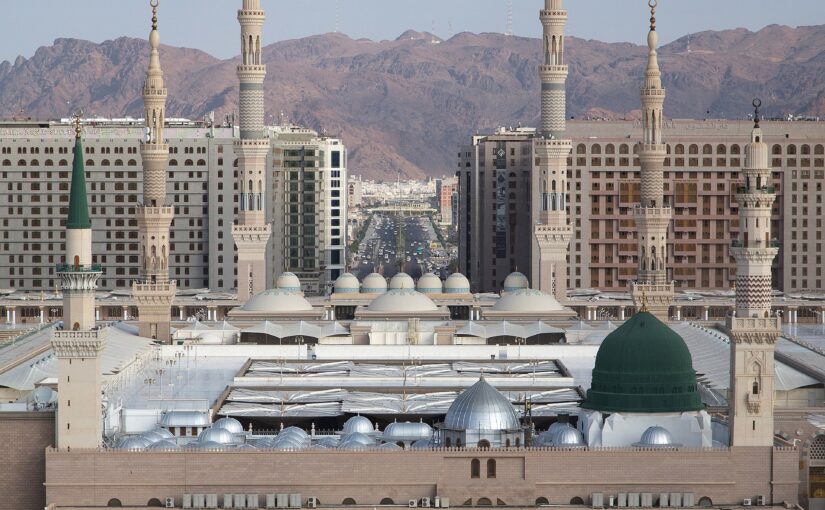
The naat “Mujhko Madine Bula Lo” is a beautiful expression of ‘Ishq-e-Mustafa’ – the deep and unwavering love for Prophet Muhammad (PBUH). Madina Munawwarah is not just a city; it is the spiritual heart of Islam. It is where the Prophet (PBUH) established the first Islamic state, built the first mosque of Islam (Masjid Quba), and where his sacred tomb resides in Masjid al-Nabawi beneath the iconic Green Dome.
The central theme of this naat is the burning desire to visit Madina and be in the proximity of the beloved Prophet. The repeated call “Mujhko Madine Bula Lo” reflects a state of spiritual restlessness, where the believer’s heart finds no peace except in the thought of reaching the blessed city. This longing is a hallmark of Islamic spirituality: the yearning to stand at the Rawza Mubarak, to offer Salaam to the Prophet (PBUH), and to feel the barakah (blessings) of that sacred land.
The line “Mere Aaqa Ka Hai Paighaam” beautifully suggests that the call to visit Madina is not merely a personal wish but a divine invitation. It echoes the famous hadith of the Prophet (PBUH) who said, “Whoever visits my grave after my death is like those who visited me during my lifetime.”
In the second verse, the poet captures the feeling of spiritual impatience: the heart has already flown to Madina, leaving the body behind. This separation between the heart’s desire and physical reality creates a beautiful tension that every lover of the Prophet can relate to.
The imagery in the line “Chand Bhi Dekh Ke Hairan Hai” is particularly striking. The poet suggests that even the moon, often a symbol of beauty in Islamic poetry, is amazed by the beauty of Madina. This is a reference to the famous hadith where the companions compared the Prophet’s face to the full moon, drawing a parallel between the beauty of the Prophet and the beauty of his city.
The soil of Madina (Khaak-e-Madina) holds special significance in Islamic tradition. The naat beautifully states that even the dust particles of Madina radiate the light of the moon and stars. This reflects the deep reverence Muslims hold for the blessed city, where every grain of sand is considered blessed due to its connection with the Prophet (PBUH).
Popularity and Reciters
This naat has been performed by many renowned naat reciters (Naat Khawans) across the globe. The most famous rendition is by Owais Raza Qadri, whose emotional and powerful voice has made this naat immensely popular in South Asia and beyond. Other notable reciters who have sung this naat include:
- Owais Raza Qadri – The most famous rendition, known for its emotional depth and beautiful melody
- Muhammad Owais Raza Qadri – Various recorded versions in different musical styles
- Amjad Sabri – Late legendary Qawwal and Naat reciter
- Hafiz Ahmed Raza Qadri – Known for his melodious voice and devotional style
- Syed Fasihuddin Soharwardi – Emotional and traditional recitation
- Various Qawwal groups – The naat is frequently performed in Qawwali style at dargahs and mehfils
The naat has also been widely shared on platforms like YouTube, SoundCloud, and various Islamic audio streaming services, garnering millions of views and listens. It is a staple at Milad gatherings, Urs ceremonies, and weekly naat programs in mosques across Pakistan, India, Bangladesh, the UK, and the Middle East.
Conclusion
“Mujhko Madine Bula Lo” is more than just a naat; it is a heartfelt prayer and an expression of the deepest spiritual longing a believer can have: to be in the blessed city of the Prophet (PBUH). Its simple yet profound words resonate with Muslims of all ages and backgrounds, reminding them of the ultimate goal of every believer: to be close to the beloved Prophet (PBUH) in this life and the Hereafter.
Whether you are listening to it during a quiet moment of reflection or reciting it in a gathering of fellow believers, this naat has the power to move hearts and bring tears to the eyes. It serves as a beautiful reminder of the love that lies at the very core of Islamic faith: the love for Prophet Muhammad (PBUH). May we all be blessed with the opportunity to visit Madina Munawwarah and offer our Salaam at the sacred Rawza, Ameen.