
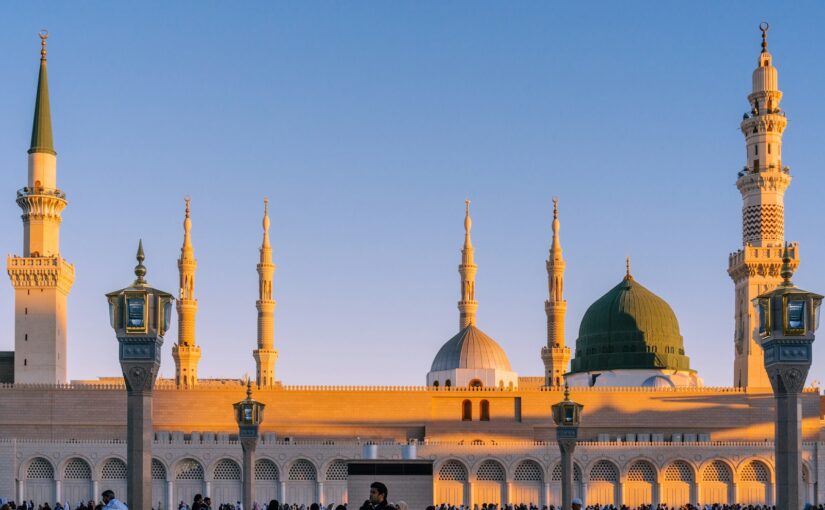
“Madine Chalein (مدینہ چلیں)” is a soul-stirring Urdu naat that captures the deep spiritual yearning every Muslim feels to visit the blessed city of Madinah Munawwarah. The naat expresses the heart’s overwhelming desire to travel to the city of the Prophet Muhammad ﷺ, to stand at his blessed Rawdah, and to experience the unparalleled peace that descends upon the soul in the shade of the Green Dome. This naat has been popularized by various renowned naat khwans and remains a beloved piece in Islamic devotional poetry.
The Significance of Madinah in Islamic Spirituality
Madinah Munawwarah (the Illuminated City) holds a place in the heart of every believer that is second only to Makkah. It is the city that welcomed the Prophet Muhammad ﷺ when he migrated from Makkah, the city where the first Islamic state was established, and the final resting place of the beloved Messenger of Allah. To visit Madinah is to experience a spiritual tranquility that words cannot fully capture — it is to stand where the Prophet stood, to pray where he prayed, and to send salutations upon him at his blessed grave.
The naat “Madine Chalein” beautifully articulates this longing. Each verse is a heartfelt plea to be granted the blessing of visiting the Prophet’s city, reflecting the deep emotional and spiritual connection between the believer and the beloved Messenger of Allah.
Madine Chalein — Naat Lyrics (Urdu Text)
Below are the complete lyrics of “Madine Chalein” in the original Urdu script along with Roman transliteration and English translation.
Verse 1
Urdu:
مدینے چلیں، مدینے چلیں
نبی کے نگر میں مدینے چلیں
جو جان لگا دے مدینے سے دل
وہ انسان بن جائے انمول پل
Roman Transliteration:
Madine chalein, madine chalein
Nabi ke nagar mein madine chalein
Jo jaan laga de madine se dil
Woh insaan ban jaaye anmol pal
English Translation:
Let us go to Madinah, let us go to Madinah
To the city of the Prophet, let us go to Madinah
The heart that devotes its life to Madinah
That person becomes priceless in an instant
Verse 2
Urdu:
وہ گنبد خضرا کی چھاؤں ہے پیار
وہ روضۂ اطہر کا دیدار ہے یار
جو اک بار دیکھے نبی کا حرم
سمجھ لے یہ دنیا ہے اک اک شگن
Roman Transliteration:
Woh gumbad-e-khazra ki chhaaon hai pyaar
Woh rozah-e-at’har ka deedaar hai yaar
Jo ek baar dekhe Nabi ka haram
Samajh le yeh duniya hai ek ek shagan
English Translation:
The shade of the Green Dome is love itself
The sight of the pure blessed grave is a gift, O friend
The one who sees the Prophet’s sanctuary just once
Realizes this world is but a fleeting moment
Verse 3
Urdu:
مدینے کی گلیوں میں خوشبو ہے کچھ اور
نبی کے درِ پر سلام کا شور
جو روتا ہے یادِ نبی میں کوئی
اسی یاد میں اس کا دل ہے معصوم
Roman Transliteration:
Madine ki galiyon mein khushbu hai kuch aur
Nabi ke dar par salaam ka shor
Jo rota hai yaad-e-Nabi mein koi
Isi yaad mein uss ka dil hai masoom
English Translation:
The streets of Madinah carry a unique fragrance
At the Prophet’s door, there is the clamor of salutations
Whoever weeps in the remembrance of the Prophet
In that remembrance, their heart becomes pure
Verse 4
Urdu:
مدینے چلیں، مدینے چلیں
نبی کے نگر میں مدینے چلیں
جہاں کا سکوں اور جنت کا نشاں
وہاں دل کا سجدہ رہے ہے جواں
Roman Transliteration:
Madine chalein, madine chalein
Nabi ke nagar mein madine chalein
Jahaan ka sukoon aur jannat ka nishaan
Wahaan dil ka sajda rahe hai jawaan
English Translation:
Let us go to Madinah, let us go to Madinah
To the city of the Prophet, let us go to Madinah
Where the world’s peace and paradise’s sign reside
There, the heart’s prostration remains forever young
Verse 5
Urdu:
ذرا سوچو اے دل! یہ کتنی بڑی بات
نبی کا ہے شہر، یہ کتنا انوکھا
یہاں آ کے ہر دل کو ملتا ہے سکون
مدینے کی خاک پہ قربان یہ جان
Roman Transliteration:
Zara socho ae dil! Yeh kitni badi baat
Nabi ka hai shehar, yeh kitna anokha
Yahan aa ke har dil ko milta hai sukoon
Madine ki khaak pe qurban yeh jaan
English Translation:
Think, O heart! How great a matter this is
This is the Prophet’s city — how unique it is
Coming here, every heart finds tranquility
May my life be sacrificed upon the dust of Madinah
The Spiritual Meaning Behind Madine Chalein
“Madine Chalein” is more than just a song or a poem — it is the heartfelt cry of a believer’s soul. The repeated call of “Madine chalein, madine chalein” reflects the urgency and intensity of the spiritual longing to visit the blessed city. This repetition is not poetic redundancy; it mirrors the persistent yearning that echoes in the heart of every Muslim who has yet to visit Madinah or who longs to return.
The naat emphasizes several key spiritual themes:
- Love for the Prophet ﷺ: The core of the naat is the profound love for Prophet Muhammad ﷺ, which manifests as a desire to be physically present in his city and at his mosque.
- The Green Dome as a Symbol: The Green Dome (Gumbad-e-Khazra) over the Prophet’s blessed grave is mentioned as a symbol of divine mercy and spiritual shelter. Its shade represents the protection and peace that comes from following the Prophet’s teachings.
- Madinah as a Place of Inner Transformation: The lyrics suggest that visiting Madinah has the power to transform a person — one who connects their heart to Madinah becomes fundamentally changed at their core.
- The Fleeting Nature of This World: The naat reminds listeners that this worldly life (duniya) is temporary, and the true treasure lies in the spiritual connection with the Prophet and his city.
The Popularity of Madine Chalein
“Madine Chalein” has been recited by many prominent naat khwans across South Asia and has gained immense popularity in the Islamic world. Its simple yet profound lyrics make it accessible to people of all ages. The naat is frequently recited at Milad gatherings, spiritual conferences, and in homes where families gather to send salutations upon the Prophet. The melody, which varies between different reciters, captures both the joy and the deep emotional longing associated with the thought of visiting Madinah.
What makes this naat particularly special is its universal appeal — whether you have visited Madinah a hundred times or are still waiting for your first opportunity, the words of “Madine Chalein” resonate deeply with your soul. For those who have been blessed to visit, the naat brings back cherished memories of standing before the blessed Rawdah. For those still waiting, it fuels the hope and dua that one day they too will be invited to the city of the beloved Prophet.
Why the Longing for Madinah is So Deep
The love for Madinah is intrinsically tied to the love for the Prophet Muhammad ﷺ. When a Muslim loves someone deeply, they naturally long to visit the places associated with that person, to walk where they walked, and to experience their physical presence in the spaces they once inhabited. Madinah is unique because it houses:
- Masjid an-Nabawi: The Prophet’s Mosque, which is the second holiest mosque in Islam, where prayer carries multiplied reward.
- Al-Rawdah al-Sharifah: The blessed garden between the Prophet’s pulpit and his house, described as a garden from the gardens of Paradise.
- The Blessed Grave: The final resting place of the Prophet Muhammad ﷺ, along with his companions Abu Bakr and Umar (may Allah be pleased with them).
- The Green Dome: The iconic green dome that has become the most recognizable symbol of Madinah worldwide.
The naat beautifully captures that this longing is not merely sentimental but deeply spiritual — it is the soul’s recognition of where true peace resides, and the heart’s natural inclination toward the place that holds the most beloved of Allah’s creation.
The Power of Naat in Islamic Spirituality
Naat (also spelled na’at) is a genre of devotional poetry that praises the Prophet Muhammad ﷺ. It has a rich tradition stretching back to the time of the companions, notably the famous poet Hassan ibn Thabit (may Allah be pleased with him), whom the Prophet ﷺ himself honored and encouraged. Over the centuries, naat has evolved into a beloved form of Islamic artistic expression, particularly in South Asia, the Arab world, and Turkey.
Naat serves multiple spiritual purposes:
- Expresses Love: It provides a beautiful medium for expressing the deep love Muslims hold for their Prophet.
- Strengthens Connection: Reciting and listening to naat strengthens the spiritual connection with the Prophet ﷺ.
- Spreads Blessings: Many verses of naat include sending salawat (blessings) upon the Prophet, which brings spiritual reward to both the reciter and listener.
- Preserves Tradition: Naat preserves the linguistic and poetic traditions of Urdu, Persian, Arabic, and other Islamic languages.
“Madine Chalein” stands as a beautiful example of this rich tradition — simple in its expression, yet profound in its emotional and spiritual impact.
Conclusion
“Madine Chalein (مدینہ چلیں)” is more than a naat — it is a prayer, a longing, and a declaration of love for the Prophet Muhammad ﷺ and his blessed city. Its verses remind us that the journey to Madinah is not merely a physical journey but a spiritual one that transforms the heart and soul. Whether you have made the journey or dream of making it one day, this naat speaks to the deepest part of your imaan.
May Allah grant us all the opportunity to visit the blessed city of Madinah, to pray in Masjid an-Nabawi, and to send our salutations upon the beloved Prophet ﷺ at his blessed grave. Ameen.
Recite the kalimah and send salutations upon the Prophet Muhammad ﷺ: اللَّهُمَّ صَلِّ عَلَىٰ مُحَمَّدٍ وَعَلَىٰ آلِ مُحَمَّدٍ